Bence H.
—
Creative Designer

Product Design Projects
Recents
Bence's Starter Team
All Projects
CGI Design System
B
100%
May 16, 2024
CGI Design System
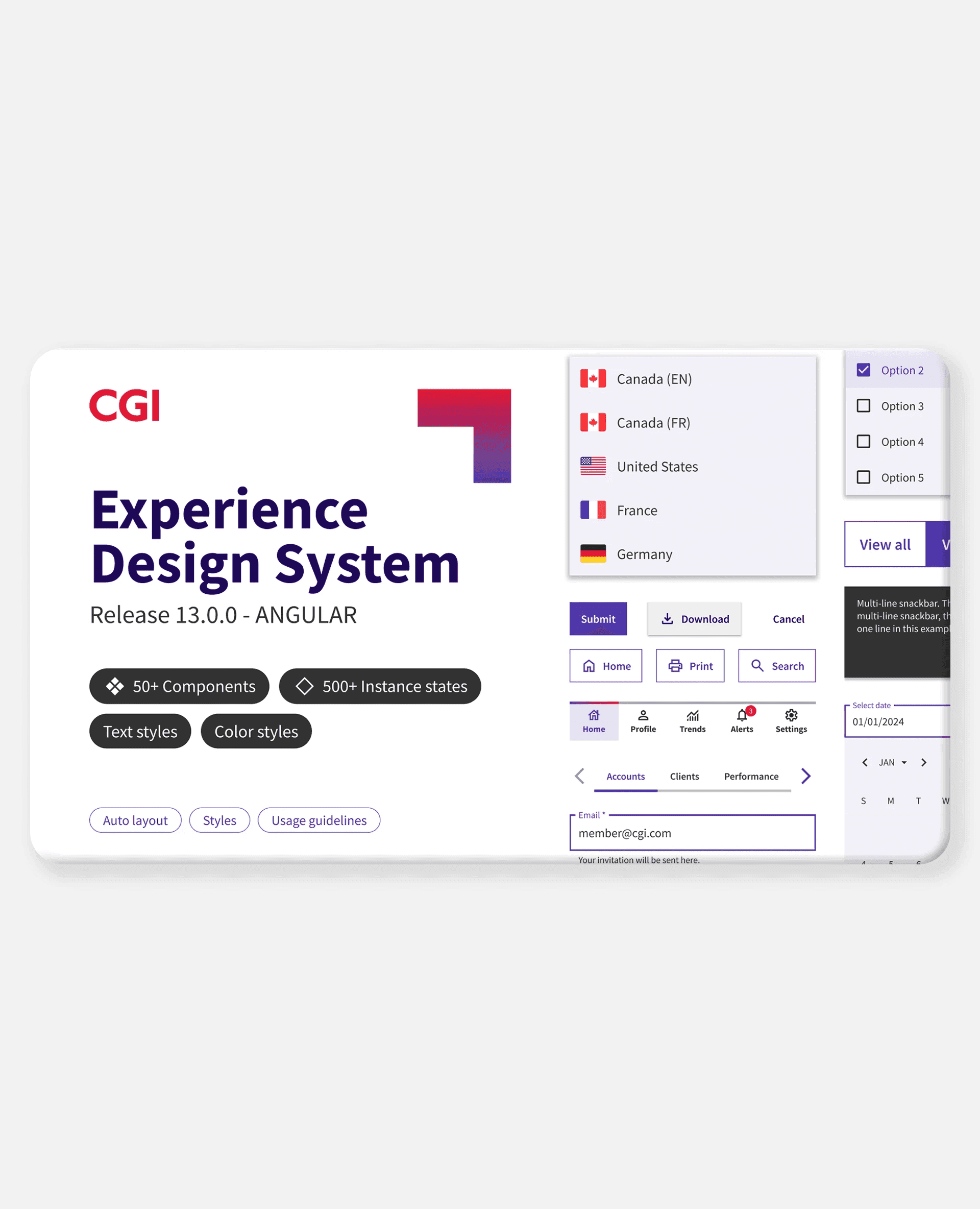
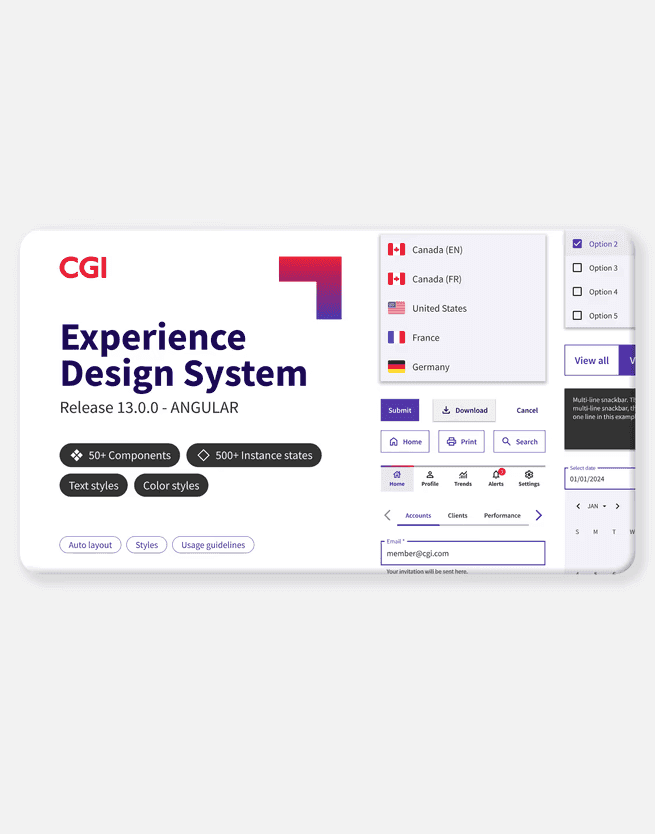
I contributed to the development of CGI’s Design System, ensuring consistency, usability, and accessibility across proposals, prototypes, and delivered solutions.
Category
UI Design
Reading Time
10 Min
Date
Problem Statement
How can complex public-sector healthcare solutions be designed, documented, and proposed in a way that aligns business goals, technical architecture, and strict accessibility requirements—while still being genuinely user-centred?
SUMMARY
At CGI, I worked at the intersection of UX Design, Business Architecture, and Technical Solution Design, primarily within public sector and healthcare initiatives.
My role focused on developing user-centred, accessible, and compliant solution designs as part of large-scale bid management and proposal processes. These solutions needed to meet increasing UX, accessibility, and regulatory requirements (EU and national directives), while remaining feasible within complex enterprise and manufacturing environments.
In parallel, I contributed to the development of CGI’s Design System, ensuring consistency, usability, and accessibility across proposals, prototypes, and delivered solutions.
⚠️ Challenges & Constraints
🛑 Strict public-sector procurement requirements
🛑 High accessibility expectations (legal compliance, not optional)
🛑 Complex stakeholder landscapes (business, legal, technical, end users)
🛑 Tight bid timelines with limited room for iteration
🛑 Regulated environments with architectural and security constraints
🎯 Goals
✅ Embed User-Centred Design into bid and proposal workflows
✅ Ensure accessibility compliance by design, not as an afterthought
✅ Align business strategy, UX, and technical architecture
✅ Communicate complex solutions clearly to non-technical decision-makers
✅ Reduce risk in bids by identifying UX, usability, and adoption issues early
👩🚀 Role: UX Designer & Business Architect (Bid & Solution Design Focus)
Bid Managers
Solution Architects
Business Analysts
Developers
Public-sector stakeholders
I was responsible for:
Solution design ownership
UX strategy within bids
Accessibility and usability compliance
Prototyping and specification writing
Stakeholder workshops and alignment
Key Activities & Deliverables
Standards & Compliance
Implemented and validated against:
WCAG 2.1
ISO 9241
EN 301 549
Ensured accessibility requirements were explicitly addressed in solution descriptions, diagrams, and specifications
Bid & Proposal Design
Defined multi-disciplinary proposal processes
Led Solution Design creation for healthcare and public-sector bids
Wrote and reviewed UX and interaction-related proposal sections
Identified UX-related risks and mitigations early in the bid phase
UX & Research
Planned and facilitated:
Stakeholder interviews
Usability tests
User research activities (where allowed in bid context)
Acted as the user advocate across business and technical discussions
Prototyping & Specification
Developed low- and mid-fidelity prototypes to:
Validate workflows
Clarify requirements
Support stakeholder decision-making
Produced UX specifications bridging design intent and technical implementation
DESIGN PROCESS OVERVIEW
The work followed a hybrid Double Diamond + Bid Lifecycle approach, adapted to procurement constraints.
1. Discover — Research & Context Building
Activities
Stakeholder interviews (business, technical, domain experts)
Analysis of tender requirements and compliance criteria
Review of existing enterprise systems and constraints
Identification of accessibility and usability risks
Key Insights
Accessibility requirements were often under-specified but legally critical
UX decisions had direct architectural and cost implications
Clear visualisation of workflows significantly improved stakeholder alignment
2. Define — Framing the Solution
Problem Definition
How might we design solutions that are compliant, usable, and technically feasible, while remaining understandable in a bid context?
Outputs
User-centred solution principles
Defined user roles and workflows
UX-driven risk assessment
Clear scope boundaries between UX, business, and technical layers
Design Principles
Accessibility-first
Transparency and clarity
Scalability across product suites
Risk reduction through early validation
3. Develop — Solution Design & Prototyping
What I Designed
End-to-end solution workflows
Interaction concepts supporting complex healthcare processes
Prototypes used as:
Bid clarifications
Internal alignment tools
Risk mitigation artifacts
Collaboration
Iterated closely with solution architects to ensure:
Technical feasibility
Security and compliance alignment
Architectural consistency
4. Deliver — Validation & Alignment
Validation Methods
Internal design reviews
Heuristic evaluations
Accessibility checks
Stakeholder walkthroughs
Outcome
Well-aligned solution designs that balanced:
User needs
Business goals
Technical constraints
Regulatory requirements
Results & Impact
UX & Quality
✅ Accessibility embedded directly into solution designs
✅ Improved clarity and confidence in bid presentations
✅ Reduced UX-related delivery risks post-contract
Business Impact
✅ Stronger differentiation in competitive public-sector bids
✅ Clearer communication of complex solutions to decision-makers
✅ UX recognised as a strategic asset in bid management
Key Learnings & Reflections
This work strengthened my ability to:
Operate strategically, not just tactically, as a UX professional
Translate user needs into business and architectural decisions
Advocate for accessibility in environments where it is legally and ethically critical
Design under constraints without compromising user-centred principles




About Me