BENCE HENZ
BENCE HENZ
BENCE HENZ

Unifying a complex maritime software ecosystem

Unifying a complex maritime software ecosystem

EIVA builds advanced software for offshore survey, inspection, navigation, robotics and subsea data workflows. The software is powerful, but the product ecosystem had grown across many tools, workflows and user types. My work focused on understanding that complexity and turning it into clearer product flows, UX requirements and design direction.

EIVA builds advanced software for offshore survey, inspection, navigation, robotics and subsea data workflows. The software is powerful, but the product ecosystem had grown across many tools, workflows and user types. My work focused on understanding that complexity and turning it into clearer product flows, UX requirements and design direction.

EIVA builds advanced software for offshore survey, inspection, navigation, robotics and subsea data workflows. The software is powerful, but the product ecosystem had grown across many tools, workflows and user types. My work focused on understanding that complexity and turning it into clearer product flows, UX requirements and design direction.

Client

EIVA A/S

Role

Product Design Lead

Year

2025-2026

Collage of Samsung product advertisements featuring Galaxy Z Fold7, Galaxy Z Flip5, Galaxy AI camera features, and a Minecraft Movie promotion.

The Brief

The Brief

EIVA’s software supports complex professional work: configuring vessels and sensors, acquiring data, monitoring quality, planning missions, controlling vehicles, processing data and delivering results.

EIVA’s software supports complex professional work: configuring vessels and sensors, acquiring data, monitoring quality, planning missions, controlling vehicles, processing data and delivering results.

The products had deep domain capability, but that capability was spread across different applications, modules, menus and interaction patterns. Users often needed to understand the product landscape before they could complete their actual work.

The products had deep domain capability, but that capability was spread across different applications, modules, menus and interaction patterns. Users often needed to understand the product landscape before they could complete their actual work.

The central design challenge was:


How might EIVA make the next generation of NaviSuite feel like one coherent product experience while preserving the expert power, flexibility, safety and data-quality control that maritime users depend on?

Hand holding Samsung Galaxy S25 Series smartphone with promotional message about an exclusive voucher and AI companion.

The UX Problem

The UX Problem

EIVA users were not asking for a simplistic product. They needed powerful tools because their work is technical, expensive and safety-sensitive.

EIVA users were not asking for a simplistic product. They needed powerful tools because their work is technical, expensive and safety-sensitive.

The deeper issue was that the complexity was often exposed in ways that made it harder to understand what mattered in the moment.

The deeper issue was that the complexity was often exposed in ways that made it harder to understand what mattered in the moment.

Hand holding Samsung Galaxy S25 Series smartphone with promotional message about an exclusive voucher and AI companion.

Design goal:
Structure complexity around the user’s workflow instead of the product’s history.

Design goal:
Structure complexity around the user’s workflow instead of the product’s history.

Key areas of focus

Right arrow
Right arrow

Fragmentation across NaviPac, NaviScan, Helmsman, Kuda, Mobula, VSLAM and related tools.

Right arrow
Right arrow

Similar tasks appearing in different programs with different interaction patterns.

Right arrow
Right arrow

Steep learning curves for newer users.

Right arrow
Right arrow

Configuration concepts that were necessary but difficult to reason about visually.

Right arrow
Right arrow

Need for clearer system readiness, recording, sensor health and data-quality feedback.

Right arrow
Right arrow

Emerging autonomy workflows that required supervision, trust and override capability.
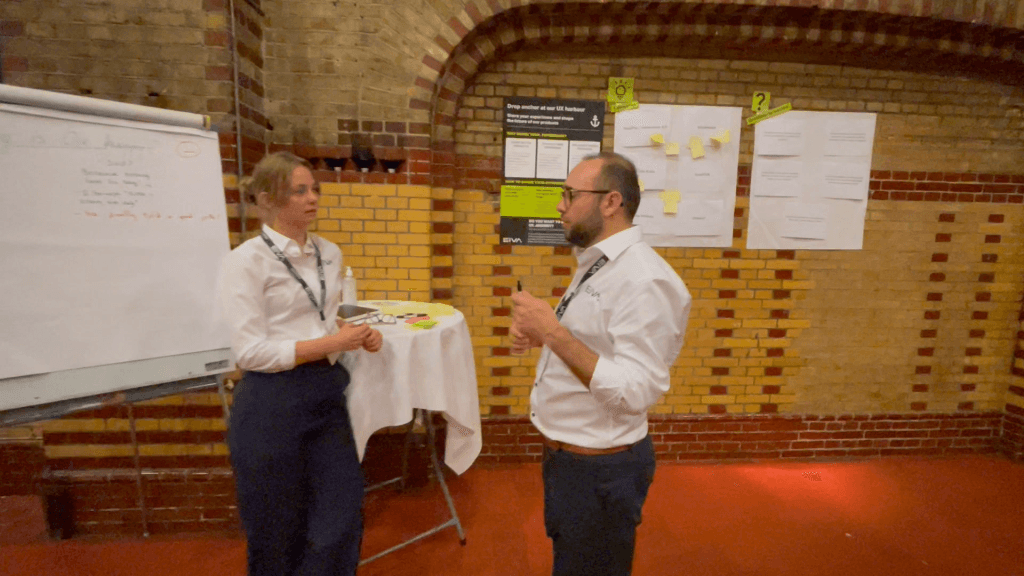
Study scope

Study scope

Text explaining Samsung

5 UX workstreams

Right arrow
Right arrow

Unifying acquisition workflows and future platform direction.

Right arrow
Right arrow

Making technical setup easier to understand and recover from.

Right arrow
Right arrow

Translating computer-vision workflows into readable system states and controls.

Right arrow
Right arrow

Supporting planning, monitoring, intervention and post-mission review.

Right arrow
Right arrow

Creating shared foundations for Figma, components, variables, handoff and governance.
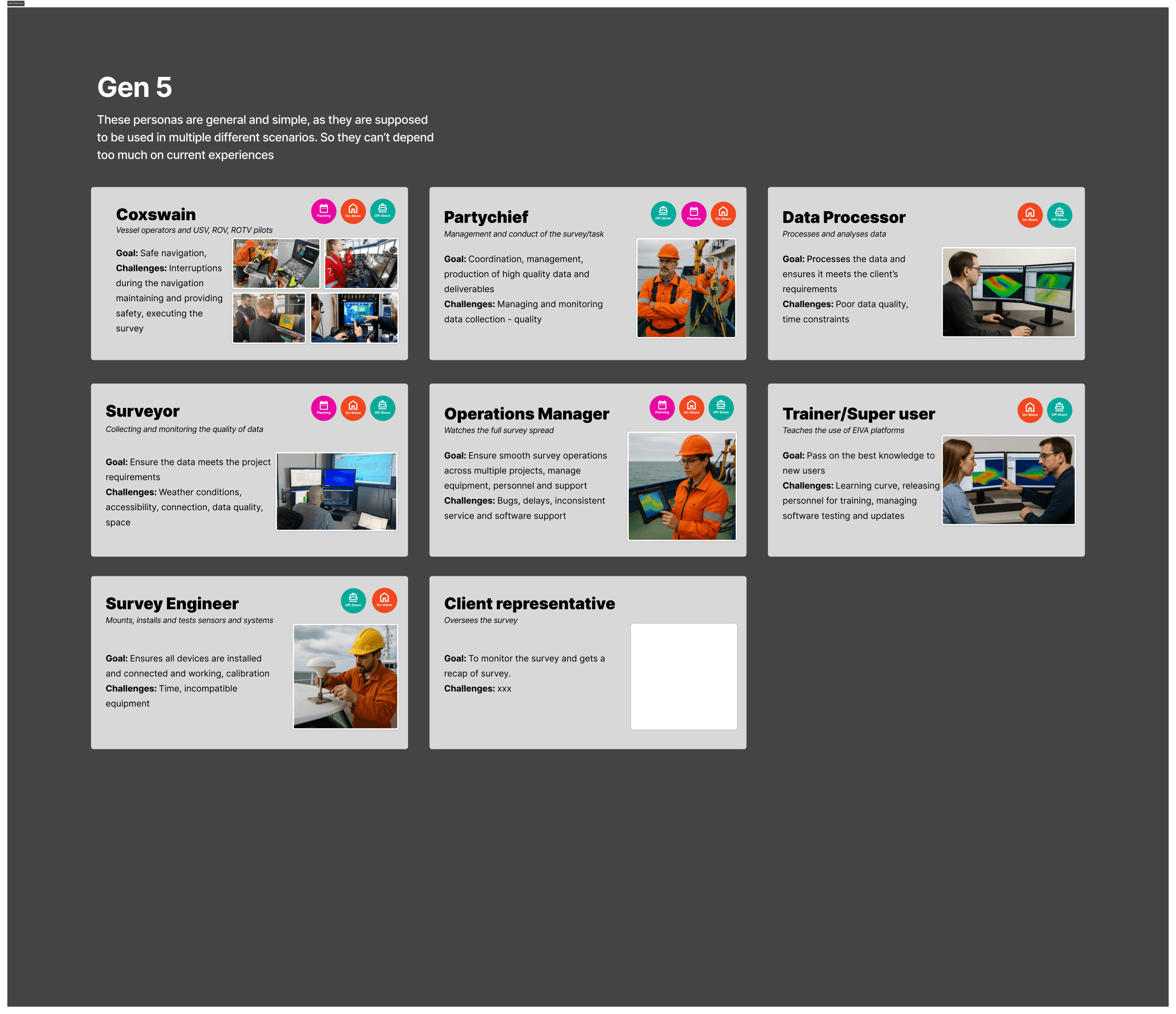
Users considered

Users considered

The study considered 9 primary user groups: The system needed to support different levels of control, visibility and technical depth. (Asset inspectors are missing from below)

The study considered 9 primary user groups: The system needed to support different levels of control, visibility and technical depth. (Asset inspectors are missing from below)

Text explaining Samsung

5 UX workstreams

Right arrow
Right arrow

Unifying acquisition workflows and future platform direction.

Right arrow
Right arrow

Making technical setup easier to understand and recover from.

Right arrow
Right arrow

Translating computer-vision workflows into readable system states and controls.

Right arrow
Right arrow

Supporting planning, monitoring, intervention and post-mission review.

Right arrow
Right arrow

Creating shared foundations for Figma, components, variables, handoff and governance.

Workflow areas mapped

Workflow areas mapped

The work reframed acquisition around 8 connected workflow stages:


  1. Mobilize vessel or vehicle

  2. Configure sensors and offsets

  3. Check system readiness

  4. Start acquisition

  5. Monitor system state and data quality

  6. Plan lines or missions

  7. Replay and review collected data

  8. Report, export or share results

The work reframed acquisition around 8 connected workflow stages:


  1. Mobilize vessel or vehicle

  2. Configure sensors and offsets

  3. Check system readiness

  4. Start acquisition

  5. Monitor system state and data quality

  6. Plan lines or missions

  7. Replay and review collected data

  8. Report, export or share results

MOST OF MY WORK IS NDA!!! So you won’t be able to see much of any UI work.

LEGACY UI:

Text explaining Samsung

WIP UI:

Text explaining Samsung

Approach

Approach

The work followed a 7-step discovery-to-definition process:


  1. Understand the domain through product documentation, survey context, PM material and internal conversations.

  2. Map stakeholder goals across product, development, architecture, autonomy, support, sales, leadership and survey expertise.

  3. Gather user evidence through interviews, surveys, field context, workshops and customer feedback.

  4. Synthesize roles, workflows, pain points and product opportunities.

  5. Translate insights into requirements, flows, principles and product direction.

  6. Make concepts tangible through boards, flows, wireframes, prototype iterations and workshop material.

  7. Improve handoff through Figma guidance, style-guide structure, component thinking and design-system evaluation.

The work followed a 7-step discovery-to-definition process:


  1. Understand the domain through product documentation, survey context, PM material and internal conversations.

  2. Map stakeholder goals across product, development, architecture, autonomy, support, sales, leadership and survey expertise.

  3. Gather user evidence through interviews, surveys, field context, workshops and customer feedback.

  4. Synthesize roles, workflows, pain points and product opportunities.

  5. Translate insights into requirements, flows, principles and product direction.

  6. Make concepts tangible through boards, flows, wireframes, prototype iterations and workshop material.

  7. Improve handoff through Figma guidance, style-guide structure, component thinking and design-system evaluation.

Text explaining Samsung

KEY INSIGHTS

KEY INSIGHTS

Right arrow
Right arrow

Power was not the problem. Clarity was.

Users valued the depth of EIVA’s software. The problem was that capability was distributed across too many products, views, settings and inconsistent pathways.

Right arrow
Right arrow

Acquisition needed a shared product model.

NaviSuite Acquisition could be understood as a family of connected workflows, not just separate applications.

Right arrow
Right arrow

Different roles needed different depth.

A surveyor, ROV pilot, client representative and data processor do not need identical interfaces. They need role-appropriate visibility, control and detail.

Right arrow
Right arrow

Configuration was a core UX problem.

Vessel definitions, sensors, offsets, reference points, geodesy and calibration all shaped whether users could trust the data they collected.

Right arrow
Right arrow

Maritime UX happens under pressure.

Users may work on moving vessels, in sunlight, with small screens, limited attention and real operational consequences.

Right arrow
Right arrow

Autonomy changes the interaction model.

Users need to plan, simulate, supervise, intervene and evaluate autonomous missions — not simply control a vehicle directly.

Right arrow
Right arrow

A design system needed governance, not just components.

Consistency required shared naming, variables, Figma practices, interaction rules, theme support and implementation handoff.

Text explaining Samsung

Outcome

The work helped EIVA move from a fragmented product landscape toward a clearer, more coherent and user-centered NaviSuite direction.


It contributed by:

  • Turning scattered user feedback into a clearer product narrative.

  • Identifying fragmentation and unclear information architecture as recurring UX problems.

  • Framing role-based access and task-based workflows as a way to support different user types.

  • Translating configuration and sensor setup into readiness, guidance and recovery concepts.

  • Making VSLAM and Discovery workflows more understandable through status, controls and feedback states.

  • Connecting autonomy strategy to mission planning, monitoring, override and review.


5

UX workstreams connected into one product story

9

Primary user groups considered across maritime operations

8

Workflow stages mapped from mobilization to delivery

Next Project

Up arrow
Up arrow

Get in touch

© Copyright 2026

Get in touch

© Copyright 2026

Get in touch

© Copyright 2026

Create a free website with Framer, the website builder loved by startups, designers and agencies.